When I was a child, we were told, “Starve a cold and feed a fever.” This appears to us to be what is going on in the stock market as we enter the fourth quarter of 2026. A massive capital investment cycle needed to build out data centers and invest in the inputs needed to use artificial intelligence has fed a feverish demand for money. Simultaneously, the U.S. Federal government is running huge budget deficits. This follows a spectacular performance, with relatively short interruptions in a 17-year bull run for the S&P 500 Index. This produced an incredible compounded return of 1,463.9%.
Our long-time investors are very aware that back in 2020-2024, we were arguing that the historically low interest rates created in the COVID-19 debacle would eventually normalize. Welcome, everyone, to normalization. What investors are not doing is adjusting the prices of common stocks based on discounting long-term net profits into today’s dollars at the newly and much higher rates!
You see, “a bird in the hand is worth two in the bush.” Therefore, as interest rates rise, you should naturally want to receive compensation for your risk sooner rather than later. We are leaning into the industries that have higher owner earnings and free cash flows now and avoiding the industries that intend to provide the returns farthest out into the future.
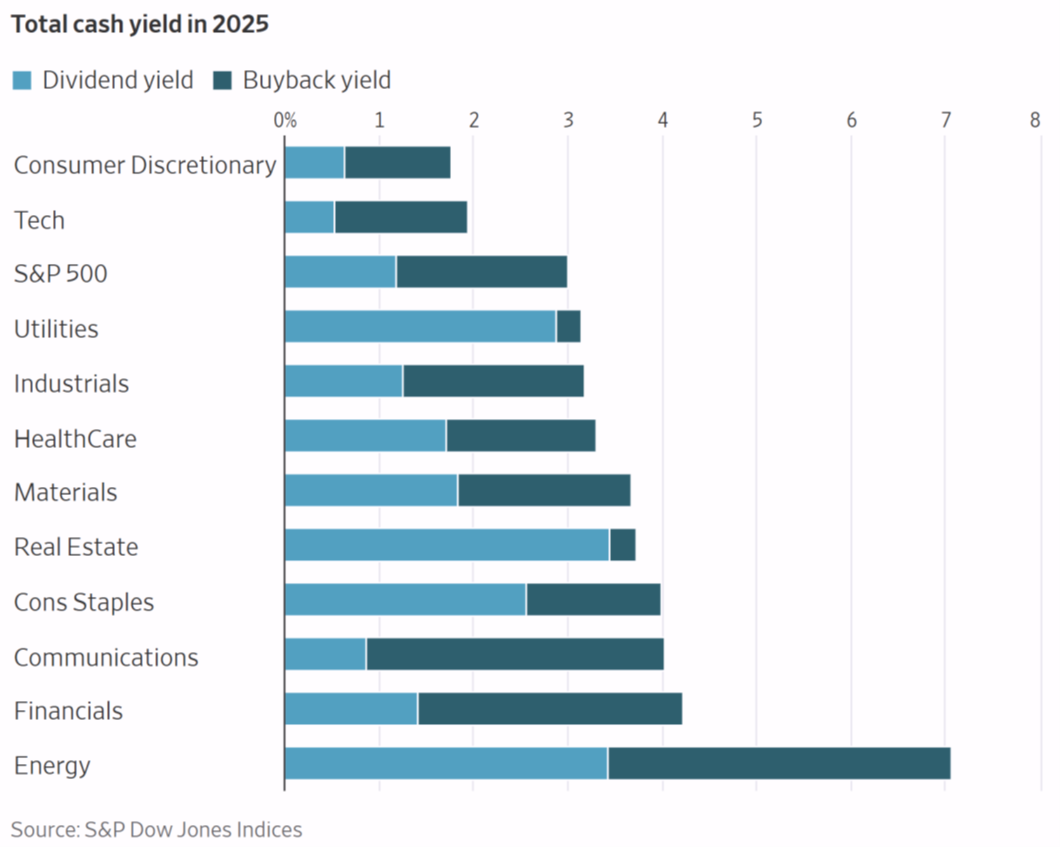
There are limits to how far the stock market can go in its excitement for euphoric circumstances. Prior maniacal markets peaked at around 40% concentration in the hot area of the S&P 500 Index. We happen to be there now. As we were prone to say back in the 1980s and 1990s, “If the Generals are leading and the troops are not following, the Generals will get slaughtered in the battle!” In the month of September, 70% of the stocks in the S&P 500 fell. The index gained 0.36% as the Generals continued marching forward.
This leads us to the questions, what usually breaks the fever, and which common stocks might benefit from it breaking? Barry Bannister, from Stifel, is one of our favorite information providers and he provided a chart that might answer the question.
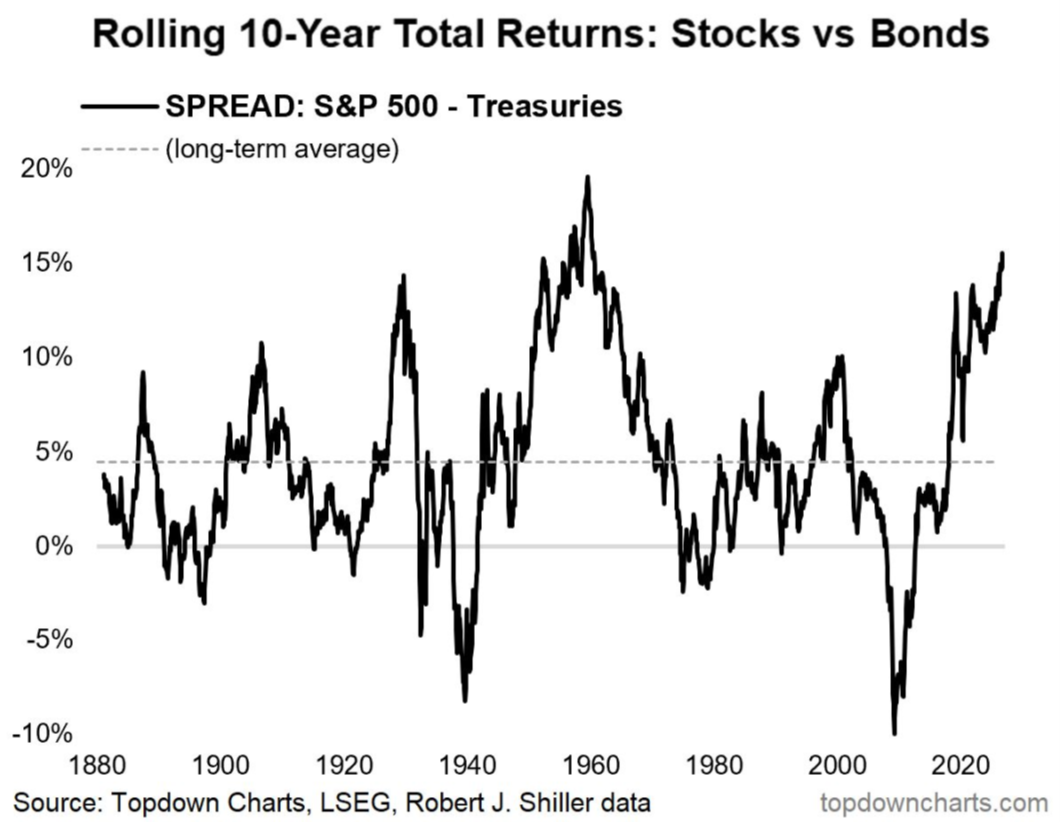
Interest rate sensitive stocks like homebuilders would be a beneficiary of breaking the fever as mortgage rates should come down. Other charts we’ve seen argue that when oil outperforms gold, value investing strongly outperforms growth! We are seeing this in real time.
In conclusion, we are more than willing to bypass whatever remaining gains are to be had from the continuation of the current euphoric and maniacal phase in stocks to defend against losing money. As Warren Buffett would say, rule number one is never lose money, and rule number two is never forget rule number one. We are excited to see how markets adjust when the fever breaks.
Play the Long Game,
_______________________________________________
The recent growth in the stock market has helped to produce short-term returns for some asset classes that are not typical and may not continue in the future. Margin of safety is the difference between the intrinsic value of a stock and its market price. The price-earnings ratio (P/E Ratio or P/E Multiple) measures a company’s current share price relative to its per-share earnings. Alpha is a measure of performance on a risk-adjusted basis. Beta is a measure of the volatility of a security or a portfolio in comparison to the market. FAANG is an acronym for the market’s five most popular and best-performing tech stocks, namely Facebook, Apple, Amazon, Netflix and Alphabet’s Google. Growth investing is focused on the growth of an investor’s capital. Leverage is using borrowed money to increase the potential return of an investment. Momentum is the rate of acceleration of a security’s price or volume. The earnings yield refers to the earnings per share for the most recent 12-month period divided by the current market price per share. Profit margin is calculated by dividing net profits by net sales. Quality is assessed based on soft (e.g. management credibility) and hard criteria (e.g. balance sheet stability). Value is an investment tactic where stocks are selected which appear to trade for less than their intrinsic values. The dividend yield is the ratio of a company’s annual dividend compared to its share price.
The information contained herein represents the opinion of Smead Capital Management and is not intended to be a forecast of future events, a guarantee of future results, nor investment advice.
Smead Capital Management, Inc.(“SCM”) is an SEC registered investment adviser with its principal place of business in the State of Arizona. SCM and its representatives are in compliance with the current registration and notice filing requirements imposed upon registered investment advisers by those states in which SCM maintains clients. SCM may only transact business in those states in which it is notice filed or qualifies for an exemption or exclusion from notice filing requirements. Registered investment adviser does not imply a certain level of skill or training.
This newsletter contains general information that is not suitable for everyone. Any information contained in this newsletter represents SCM’s opinions, and should not be construed as personalized or individualized investment advice. Past performance is no guarantee of future results. There is no guarantee that the views and opinions expressed in this newsletter will come to pass. Investing in the stock market involves gains and losses and may not be suitable for all investors. Information presented herein is subject to change without notice and should not be considered as a solicitation to buy or sell any security. SCM cannot assess, verify or guarantee the suitability of any particular investment to any particular situation and the reader of this newsletter bears complete responsibility for its own investment research and should seek the advice of a qualified investment professional that provides individualized advice prior to making any investment decisions. All opinions expressed and information and data provided therein are subject to change without notice. SCM, its officers, directors, employees and/or affiliates, may have positions in, and may, from time-to-time make purchases or sales of the securities discussed or mentioned in the publications.
This Newsletter and others are available at smeadcap.com